
As A Former Head Of MI6, It's Clear That Britain's Climate Policy Is Leaving Us Dangerously Exposed To Our Enemies
Authored by Richard Dearlove via The Daily Sceptic,
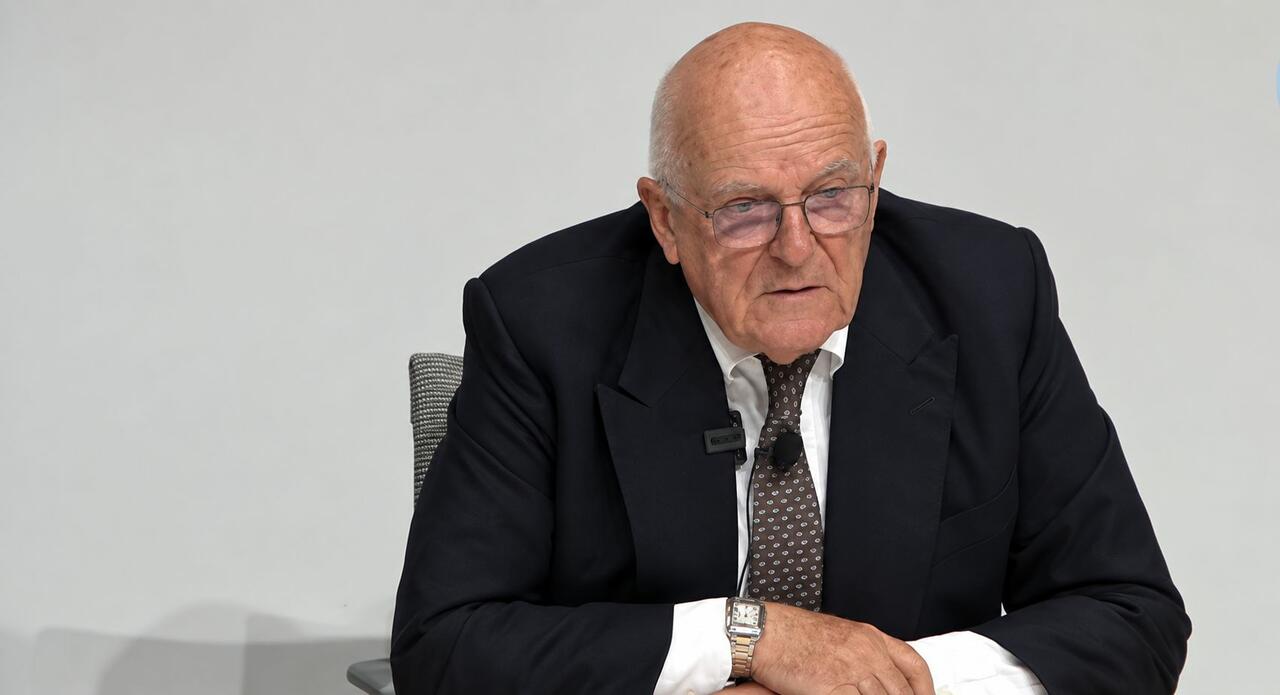
This is the transcript of a lecture given in London last night to the Global Warming Policy Foundation by Sir Richard Dearlove, the former head of MI6, titled 'Energy Security: Blowing in the Wind'. The full lecture is available to watch on YouTube.
A summer of drought and record temperatures has discomforted the country: parched ground, overheated public transport, sleepless nights and a distorted and obsessive media. It is a distracting backdrop for a lecture on energy security - 'climate change' must be the most repeated phrase of the last three months since the first heatwave of the summer back in May. To step out of this context will seem like a heresy to the ideologues of Net Zero. Are you blind to the disturbing evidence around us, they will ask. However, the extreme weather events of the last 90 days are not a logical place to start a debate about energy security. We must take a strategic view free of prejudice, and put aside emotionally charged, only partly scientific convictions about climate change.
There are so many of them - for example Lord Deben's endless preaching from his 'countryside crusader' soapbox in Country Life, the frequent BBC interviews with Met Office scientists. However, I am pleased that the media debate is not entirely one-sided and that some heavyweight voices are striking a counterbalance. For example, this from a very recent Washington Post op-ed: "Nations are finally realizing they cannot afford to shun any power source for ideological reasons" - written in the context of a striking revival of interest in nuclear power.
Of course, I am not a scientist, and I do not have formal technical qualifications; but I did spend 38 years in the intelligence service, where one gets some practice in weighing up intelligence of various kinds, and for more than 20 years since have been one of its speaking heads. National security and the geopolitics of national security are my thing. Very few share my depth of experience - successes and failures.
My principal aim in this lecture is to lay bare the vulnerabilities in our national energy stance - note my reluctance to use the word policy. I do not think that government has an energy policy; perhaps it has a climate policy (which raises the question of whether it is actually possible to have a climate policy or whether such a policy falls into the category of extracting sunbeams from cucumbers). For analytical expertise and strategic analysis, I am indebted to Dr John Constable and to Professor Gwythian Prins. Their contributions to this lecture are extensive.
As my title suggests, the UK's climate stance/policy currently lacks security anchors; and the answer, my friends, is certainly not blowing in the wind. It has been more a finger in the wind. As a country we have been drifting and we are dangerously exposed. The most pressing threat to this country is not man-made climate change as Ed Miliband and now Miatta Fahnbulleh, avidly supported by legions of so-called experts, would have us think. There is no simple link between canceling Rosebank and stopping wildfires. To believe such a thing is the height of naïvety, or ignorance of the science, or conviction akin to religious belief.
National security is three dimensional. There is the direct threat mounted against us by hostile states - the easiest to understand. Then there are the vulnerabilities created by shortcomings in our infrastructure and policies and subject to exploitation by our enemies and competitors. The third dimension is from threats that we have failed to identify accurately and for which there is little or no defensive preparation. Putin's Russia characterizes the first, our neglect of defense expenditure the second, and the Covid pandemic (lab made and not zoonotic as some of us alerted Boris Johnson in early 2020) the third.
Extreme weather and climate change are a natural hazard and are a huge disruptive threat for which we should and do make contingencies - like the Thames Barrier. Mankind has always had to live with these disruptions, dictating patterns of human settlement and how, over centuries, we have planned and built. The belief that we might exercise a degree of control over the climate is an understandable aspiration but common sense, which accepts that we cannot control the weather, would suggest it remains beyond human reach. The recent earthquake in Venezuela or the falling mountain in Tibet should remind us that our exposure to the forces of nature is not something we can control - only sometimes partially mitigate.
By all means include natural hazards in a list of national security threats (as the British Cabinet Office does) but do distinguish them as being separate from those that emanate from hostile nations and entities.
The two issues on which I will focus in this lecture are: the vulnerabilities of our energy infrastructure, and their actual and potential exploitation by foreign powers that do not share our national interest. I am not qualified to argue the case on climate science about which so many here are expert. I am therefore sticking to the areas closest to my own expertise.
When I was C (chief of MI6) I had the unusual experience of meetings with hostile international players - the Russian leadership, the PRC leadership and Qaddafi amongst others. I do not need to go into the purpose of those meetings here. However, it is worth recording a conversation with the Chinese general who was then head of the 2PLA - the all-powerful Military Intelligence Service of the PRC to which Deng Xiaoping had granted primacy in the Chinese intelligence community.
I should first explain the significance of that conversation. The Chinese Communist Party leadership shares many of the characteristics of a cult, albeit one that has seized control of a whole country - it claims infallibility in doctrine whilst proclaiming its leaders to be faultless scientists of human affairs. It therefore extirpates ruthlessly any cult that seeks to challenge its infallibility within the PRC. However, it is also ideologically attuned to exploiting the cults of its enemies not only to weaken them from within but also to make them a vehicle for their own baleful influence. The methodology is built into the PRC's DNA because it is so sensitive to its own vulnerabilities.
The focus of the general's concern was the activities of Falun Gong in the UK and Europe amongst the Chinese diaspora. The Falun Gong movement witnessed huge growth in China in the 1990s until it was subject to a massive campaign of suppression. The PRC saw the cult as a direct challenge to the authority of the Communist Party, with which it shared certain conspiratorial, organizational and ideological characteristics.
In the democratic West we are thoroughly familiar with the fashionable cults and movements that blow through society. Only those that espouse violence are subject to legal suppression. Their durability is variable and so is the extent to which they capture serious political attention. Remember CND, the campaign against the deployment of cruise missiles in Europe, the various emanations of Palestinian terrorism, the radical terrorist groups in Germany and Italy in the 1970s. To these I would now add climate catastrophism and its associated greening and anti-carbon fuel movements - and you will have others in mind like Black Lives Matter and the pro-Hamas Palestinianism so evident recently on our streets.
Climate catastrophism has built major bridgeheads in the public mind, in the media and in the political domain. It is also a driver of the Net Zero bandwagon. Challenging this edifice, despite its shaky foundations, has been difficult - though a shift in the Overton window does now allow a little more space for a talk such as this one.
What is beginning to be well documented by academic research is the extent to which the movements which were spawned during the Cold War, like CND and radical terrorist groups like the Red Army Faction, were exploited by Soviet Active measures which used them ruthlessly to try to undermine and weaken the West. Their support for and penetration of them was methodical and extensive. Those skills are alive and well today in Russia and China. The SVR and 2PLA have large departments focused on active measures supported by other whole-government initiatives.
The PRC's capability needs explanation. Perhaps more important than 2PLA, with which it works closely, the Chinese Communist party's United Front Work Department counts 40,000 employees and 600,000 in affiliated organizations and together has a budget in the low billions of dollars. The department's purpose is to shape a world favorable to the PRC's interests. It has seen an important revival of its role under Xi's rule. You may recall the case of the Chinese lawyer Christine Lee's unlimited travel and entertainment largesse which was lavished around Westminster - a classic example of UFWD influence.
Helpfully, the Chinese Communist Party likes to publish its doctrine. One example is the 1999 paper written by two second intelligence officers titled 'Unrestricted Warfare: assumptions on war and tactics in the age of globalization', which describes the efficacy not of physical disarmament of the enemy but of its moral disarmament. You can see therefore why Xi Jinping has himself described the UFWD as "China's magic weapon".
On a recent visit to Spain (Pedro Sanchez the Spanish PM sees China as a favored partner) I asked a group of Spanish MPs if they knew about the UFWD. Not one of them knew of it or understood its role - yet Spain at the moment is one of the main focuses of its European activity. Perhaps we are slightly more alert in the UK, but there is no harm at all in raising awareness further.
The Russian threat is actual and immediate. It requires less explanation because it is so obvious. Putin's Russia sees itself already engaged in gray warfare with the West on account of our support for Ukraine. It is prepared to carry out attacks without consideration of the political risk. The Russian agency that conducts this conflict is mainly the GRU, Russian military intelligence - equipped and trained to carry out acts of sabotage behind enemy lines. Its various attacks in Europe have been widely publicized.
I would, in the context of this talk, draw particular attention to just one of its capabilities. As the Cold War ended Russia nonetheless continued to invest heavily in developing its underwater warfare resources. The intelligence about this back in the early 2000s was striking; and today we understand better why the Soviet Union, even as it disintegrated, had the foresight to invest in the capability to interfere with undersea cables, pipelines and electricity grid interconnectors. The evidence of its aggressive intentions is incontrovertible.
It may surprise you that I am not going to dwell on the manifest illogicalities of our current energy circumstances: the extreme Net Zero targets; the deprecation of intrinsically cheap conventional energy; the excessive subsidies to renewable electricity; the refusal to exploit our own fossil fuel resources; the grid's struggle to manage an increasingly stochastic generation profile; the poor thermodynamic quality of renewables; and the growing dependence on imports in distressed circumstances. The list is long and familiar to all of you - and the point of this lecture is to develop a fresh perspective on the nation's energy security.
I urge our leading politicians to take very careful note. We are not the victims of a conspiracy to make us vulnerable. We have quite casually done this to ourselves. We have as a nation negligently wandered close to a cliff edge and the adversaries I have described stand ready to help us over it; and the fragility of the present international order enhances the risk. "Do not distract your enemy whilst he is making a mistake," was Napoleon's famous dictum. The leaders of the CRINK alliance are smirking at our lack of realization about what we allowed our energy sector to become.
John Constable has introduced me to some frightening statistics. Comparing energy flow data for 1974 and 2025, it shows industrial final consumption has fallen by about 70% in absolute terms, from 41% to 14% of the national total, whilst transport rose by 76% to become the largest single sector. Only 50 years ago the UK was still a major industrial power. Iron and steel manufacturing, once substantial, has all but completely disappeared (when I went to university in 1963 my mother, who unusually had a career, was about to retire as Chef de Cabinet to the chairman of the United Steel Companies).
Three consequences follow. The country has lost the industrial capacity to reproduce its own energy system, so that uncertain access to equipment and spares (for example generators and transformers) is a graver and more chronic danger than a temporary shortage of gas. Deindustrialization also means that the UK has lost the large interruptible load that once allowed a shortage to be absorbed by factories rather than households (remember the three-day week). Furthermore, in ceasing to manufacture, it has exported its exposure to the energy systems of its suppliers, some of whom are strategic adversaries.
Our foreign policy is therefore fettered, and could even be held to ransom - does the Foreign Secretary, the arch prophet of Net Zero, have any grasp of the country's predicament? His present obsession with new West Bank Israeli settlements (whilst Kyiv incidentally is being torn apart by Russian missiles) suggests that his attention is elsewhere.
The economic and social character of the country has of course changed enormously in 50 years. What was a heavy-duty production system has become a consumption center. The current pattern of our energy consumption shows that we move about and buy things, largely imported things. We do not manufacture as we once did. In the process we have inadvertently destroyed the circularity which largely assured our energy security. The energy system required industrial output and industrial output required energy.
That kept us sane and kept us on the rails. So, in complacently deindustrializing we have not merely lost an industry, we have lost the capacity to rebuild the energy system itself. Large-scale transformers ordered today now take two years to arrive, (before 2020 it was seven to 14 months), generators up to three years, and the grain-oriented electrical steel (GOES), for which there is no real substitute, comes largely from China, whose production capacity now dwarfs any other state. Europe has just two producers of that steel remaining, both plagued by reductions and closures as China undercuts the market. Britain and its allies do retain the capacity to design and assemble the apparatus on which the grid depends, but the material without which none of it can be built is being concentrated in the hands of the very country which the Director General of MI5 has identified as the most serious threat to Britain's national security.
Some power sector manufacture still remains in the hands of reasonably friendly powers, but in a tight corner there may be practical limits to friendship, and in any case, there will be a queue.
The PRC leadership thinks long-term, and it does not have to worry about re-election, only about its survival. One of its policies, pursued with great success, has been to build dependencies not just in its own regional sphere of influence but globally. We have seen the leverage that its domination of the production of rare earths has secured, and we have watched how Huawei (a company closely associated with the PLA) has knocked out its foreign competitors and spread its communications technology around the world. London Transport has also recently started to purchase Chinese electric buses, made of course with the benefit of large state subsidies, all of them subject to software control by the manufacturer.
The idea that 'Your No. 22 isn't running today because the vehicle has just been immobilized by the manufacturer' is faintly comic, but the weakening of the electricity grid is of another order - let us say because failing equipment could not be replaced. Water, sewage, gas networks, rail and underground transport, traffic lights and communication are all mains-connected. Such peacetime dependencies give China strategic leverage, and in a crisis, it gives it weapons of mass disruption which could literally bring a country to a standstill. In the documentation for the 20th Party Congress, Xi Jinping talks of China achieving global domination by 2045; we should take the threat seriously because the methodology for doing it is being put in place under our very noses.
The bulk of my professional experience was on the front line of the Cold War. We used to make the following assumptions: that the country's war-fighting potential resided in its industry, that our most vulnerable link was the fuel chain (mostly then carried by sea) and that our industrial base could be rebuilt and repaired - a question of time and organization rather than capability.
The terms of that equation have fundamentally changed. We have very little industry left to protect and we cannot rebuild non-existent industries which lie in foreign jurisdictions beyond our reach. And consequently, the state cannot, through emergency command and control, promptly rebuild what it loses, because the industries are now in other jurisdictions and beyond its reach. It can join the queue, or it can beg. Furthermore, a consumer-led energy society is exposed to breakdown when failures occur. It cannot temporarily switch power consumption away from industry to keep home fires burning.
Saying that the current energy policy is mad or grounded in the religion of climate change does not really get us very far - simply into shrill arguments that deepen the disagreement. What I have tried to do, with a great deal of help, is to take the argument back towards a national Grand Strategy for energy, one which recognizes that we live in a tense and hostile world where the greatest danger is not climate change. If a present or future government can evaluate and plan its exposure to energy risks - for example, identifying single points of failure dependent on foreign manufacture and building contingencies around them - then we could be on track towards a more security-aware energy policy. It might also engender a more balanced assessment of the thermodynamic value of the national fuel mix.
We have talked blithely about 'powering past coal' but no major industrial power has in reality abandoned coal for heavy industry, China in particular, and in fact we remain dependent on the products of those economies. This is a difficult message for many of our politicians to accept.
Might we make it easier for them if, for a start, we introduce a concept of national security exceptions to Net Zero - a quarter way house until sanity returns and the country is ready to embrace a balanced energy policy.
In this context there is also a compelling case to do all that we can to rebuild the strategic industries we require to ensure that we can defend our island fortress and be a reliable ally to friendly democracies around the world. This is a subtle matter - the state is almost certainly not the best agent for this undertaking - and it would probably take at least a generation, but the legacy benefits would be enduring. The first responsibility of government is the safety of the nation.
However, successive governments have forgotten this, and Britain is now caught in an energy trap of its own making. As with rebuilding our armed forces, it will take a significant national effort to extract us and bring us back to a position of safety. The task is urgent. The Government should have this amongst its very top priorities. Instead, we are being urged to remove a few thousand rough sleepers from our streets - a laudable feel-good objective but not exactly of strategic importance to the destiny of the proud nation that is Great Britain.
Sir Richard Dearlove is Chair of Board of Trustees of University of London and a former head of the British Secret Intelligence Service (MI6). This transcript was first published on the GWPF website.
Tyler Durden Sat, 09/19/2026 - 08:10
Recent comments